
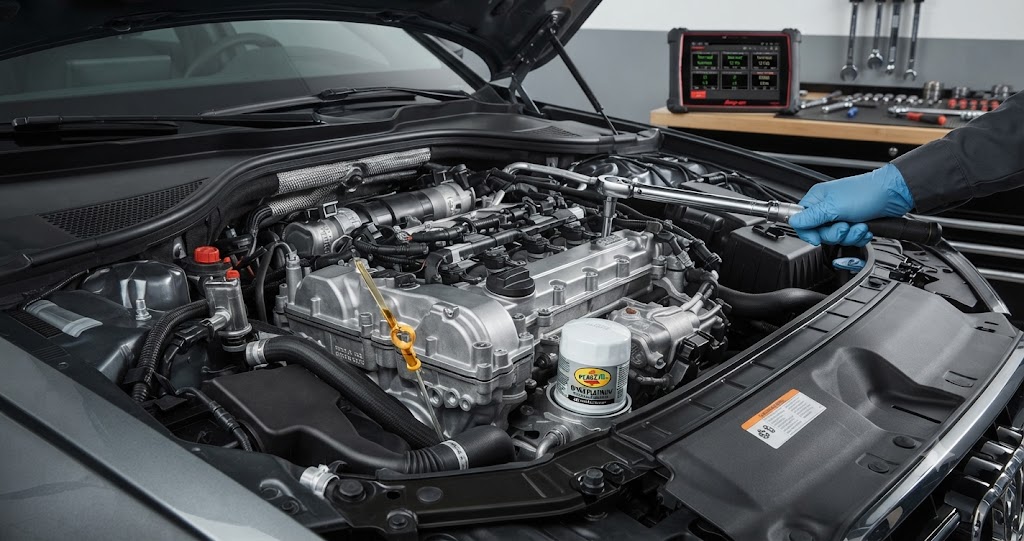
To extend your car engine life significantly, prioritize strict adherence to manufacturer oil change intervals, cooling system health, and progressive warm-up routines. By managing engine load, monitoring fluid integrity, and addressing minor vibrations or sensor alerts immediately, you prevent catastrophic mechanical failure and ensure longevity well past 200,000 miles.
The Core Philosophy: Preventive Maintenance vs. Reactive Repair
Extending engine life is not about “miracle additives”; it is about controlling heat and friction. Modern engines are marvels of tight tolerances. When you neglect a $50 part—like a thermostat or a PCV valve—you often induce a cascading failure that shortens the engine’s lifespan by thousands of miles.
1. The Oil Lifecycle Management
Oil is the lifeblood of your engine. It does more than lubricate; it cools, cleans, and seals.
- Follow Severe Service Intervals: If you live in a city, commute short distances, or endure extreme weather, follow the “Severe Service” schedule in your manual, not the “Normal” one.
- Synthetic is Non-Negotiable: Synthetic oils offer superior thermal stability. They resist breakdown at high operating temperatures and flow faster at startup—the moment when 80% of engine wear occurs.
- Filter Quality: Do not buy generic filters. Premium filters (e.g., those with synthetic media) maintain high flow rates while capturing smaller particulate matter.
Engine Longevity Data Comparison
| Component | Maintenance Frequency | Risk of Neglect |
|---|---|---|
| Engine Oil/Filter | 5k–7.5k miles | Sludge buildup, bearing failure |
| Coolant (Antifreeze) | 30k–60k miles | Corrosion, head gasket failure |
| Air Filter | 15k–30k miles | Increased oil consumption, reduced MPG |
| Spark Plugs | 60k–100k miles | Misfires, catalytic converter damage |
Thermal Management: The Silent Killer
Heat is the enemy of metal components. Your cooling system’s job is to maintain a precise operating temperature.
Cooling System Integrity
If your gauge moves past the middle, the damage is often already occurring. Inspect hoses for sponginess and replace the coolant according to the chemical type specified for your car (OAT vs. HOAT). Mixing incompatible coolants creates a gel that clogs heater cores and narrow coolant passages in the cylinder head.
The Warm-Up Myth
Do not idle your car for 10 minutes to “warm it up.” It is inefficient and causes fuel dilution in the oil. Instead, start the car, wait 30 seconds for oil pressure to stabilize, and drive gently. The engine warms up significantly faster under a light load, reaching optimal operating temperature sooner.
Tactical Engine Care Framework
To maximize your engine’s service life, implement this hierarchical framework:
- Phase 1: Startup Hygiene: No aggressive acceleration until the oil has reached its operating range.
- Phase 2: Load Management: Avoid “lugging” the engine (driving in a gear that is too high for the speed). This puts immense stress on the rod bearings.
- Phase 3: Sensor Maintenance: If a Check Engine Light appears, address it. A faulty O2 sensor can force the engine to run “rich,” which washes oil off cylinder walls and dilutes the oil in your crankcase.
Advanced Troubleshooting and Diagnostics
Beyond standard oil changes, keep an eye on these specific “health signals”:
- Oil Consumption: If you are adding a quart every 2,000 miles, you have an issue. It could be PCV system failure or worn valve stem seals. Addressing this early prevents carbon buildup on valves.
- Vibration Analysis: An engine that idles roughly is an engine with bad motor mounts or ignition issues. Excess vibration accelerates the wear of internal components and accessories.
- Exhaust Color: Blue smoke indicates oil burning; white smoke (thick/sweet smell) indicates a head gasket breach. Catching these early is the difference between a simple repair and a full engine replacement.
Component Comparison: Driving Habits
| Driving Style | Impact on Engine | Recommended Action |
|---|---|---|
| Stop-and-Go | High idle, heat soak | Change oil 25% earlier |
| Highway Cruising | Consistent temperature | Standard interval is fine |
| Short Trips | Moisture buildup, incomplete warm-up | Longer “burn-off” drives weekly |
Frequently Asked Questions (FAQ)
Q: Does fuel grade actually extend engine life?
A: If your manual recommends premium, use it. High-compression or turbocharged engines rely on higher octane to prevent pre-ignition. Using lower-grade fuel forces the engine to retard timing, which can lead to carbon buildup and long-term internal stress.
Q: Is engine flushing safe for high-mileage cars?
A: It depends. If you have neglected oil changes for years, a flush might dislodge large chunks of sludge that could block the oil pickup screen. For well-maintained engines, it is generally unnecessary.
Q: What is the most important “hidden” maintenance item?
A: The PCV (Positive Crankcase Ventilation) valve. It manages internal engine pressure. A stuck valve leads to oil leaks, poor fuel economy, and sludge formation. It is a $20 part that saves thousands.