
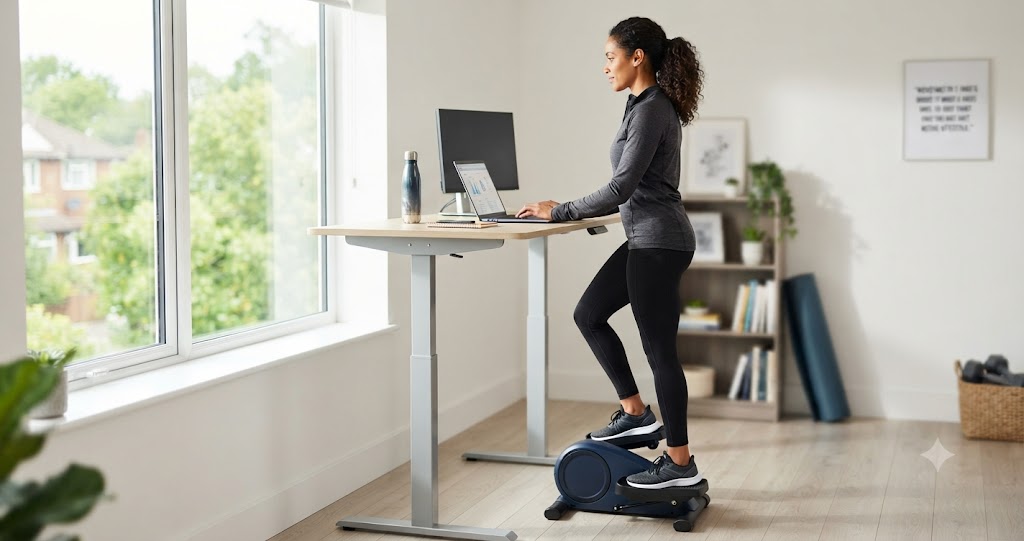
Consistency in physical activity is rarely about willpower; it is about infrastructure. When you remove the friction between the decision to move and the act itself, activity becomes a default state rather than a daily struggle. This article provides a blueprint for integrating movement into a modern, sedentary lifestyle through deliberate habit stacking and environmental design.
The Infrastructure of Daily Movement
Most people fail to stay active because they rely on motivation. Motivation is a finite resource. To maintain daily activity, you must design an environment where moving is the path of least resistance. This means pre-loading your day with physical cues.
Habit Stacking and Activity Anchors
Habit stacking is the process of pairing a new habit with an existing one. If you want to integrate activity, you must anchor it to things you already do without thinking.
- The Morning Reset: Before your first cup of coffee or tea, perform a five-minute mobility routine.
- The Post-Work Transition: Immediately upon closing your laptop or finishing your final task, change into activewear. This creates a psychological boundary between “work mode” and “personal time.”
- The Meeting Walk: If you are on a call that does not require a screen, you should be moving. Use a wireless headset to pace around your office or home.
Micro-Workouts: Solving the Time Constraint
The “all or nothing” mentality—the belief that a workout must be 60 minutes to “count”—is the primary cause of inactivity. Research into non-exercise activity thermogenesis (NEAT) proves that cumulative movement throughout the day provides significant metabolic benefits.
| Strategy | Execution | Benefit |
| The 10-Minute Split | Three 10-minute bouts of brisk walking | Equivalent cardiovascular benefits to one 30-minute block |
| The Hourly Reset | 60 seconds of squats or lunges every hour | Prevents stiffness and promotes blood flow |
Overcoming Environmental Bottlenecks
A common bottleneck in daily activity is the home or office environment. If your chair is comfortable, you will sit. If your couch is the center of your living space, you will lounge. You must restructure your physical space to encourage motion.
Optimizing Your Workspace
If you work at a desk, your setup should be designed to force position changes.
- Variable Heights: If you use a standing desk, alternate every 30-40 minutes.
- Distance Constraints: Keep your water bottle in the kitchen, not at your desk. This forces a walk every time you need a drink, which also improves hydration levels.
A Data-Driven Framework for Activity
When planning your week, treat physical activity like a business project. You wouldn’t skip a client meeting, and you shouldn’t skip your movement block. Use the following framework to ensure you hit your goals consistently.
The “Must-Have” vs. “Nice-to-Have” Framework
| Movement Type | Frequency | Objective |
| Active Recovery | Daily | Joint mobility, lymphatic drainage |
| Zone 2 Cardio | 3-4 times per week | Mitochondrial efficiency, cardiovascular base |
| Resistance Training | 2-3 times per week | Muscle maintenance and metabolic rate support |
Troubleshooting Consistency
Even with the best plans, life intervenes. When you miss a day, the risk is not the missed workout; the risk is the “what-the-hell” effect, where one missed day leads to a week of inactivity.
- The “Never Miss Twice” Rule: If you miss a scheduled session, your only goal for the next day is to perform at least 5 minutes of movement. This preserves the identity of being an active person.
- The Fatigue Override: If you feel too exhausted to work out, choose a lower-intensity activity like a slow walk rather than total inactivity. This keeps the habit loop intact while allowing for physiological recovery.
Advanced Physiological Maintenance
Staying active is not just about calorie expenditure; it is about maintaining the machinery of your body.
Why Range of Motion Matters
Daily activity often lacks a focus on sagittal and frontal plane movement. Most daily life happens in the forward-backward plane. To stay truly active, you must incorporate lateral movements.
- Lateral Lunges: These improve hip stability and protect the knees.
- Thoracic Rotations: Essential for anyone who spends significant time at a desk, as it prevents the forward-hunched posture that leads to back pain.
Nutrition and Recovery Synergies
Your ability to move daily is directly tied to how well you recover. If your sleep or nutrition is poor, your central nervous system (CNS) will limit your desire to move. Prioritize protein intake to support muscle repair, and monitor your heart rate variability (HRV) to gauge whether you need a high-intensity day or a recovery day.
True activity is not found in a gym; it is found in the choices you make between 8:00 AM and 8:00 PM. By implementing the strategies above—habit stacking, micro-workouts, and environmental design—you remove the barrier between intention and action. Start by changing one small aspect of your morning or work routine today. Consistency, built on a foundation of small, repeated actions, is the only metric that matters for long-term health.