
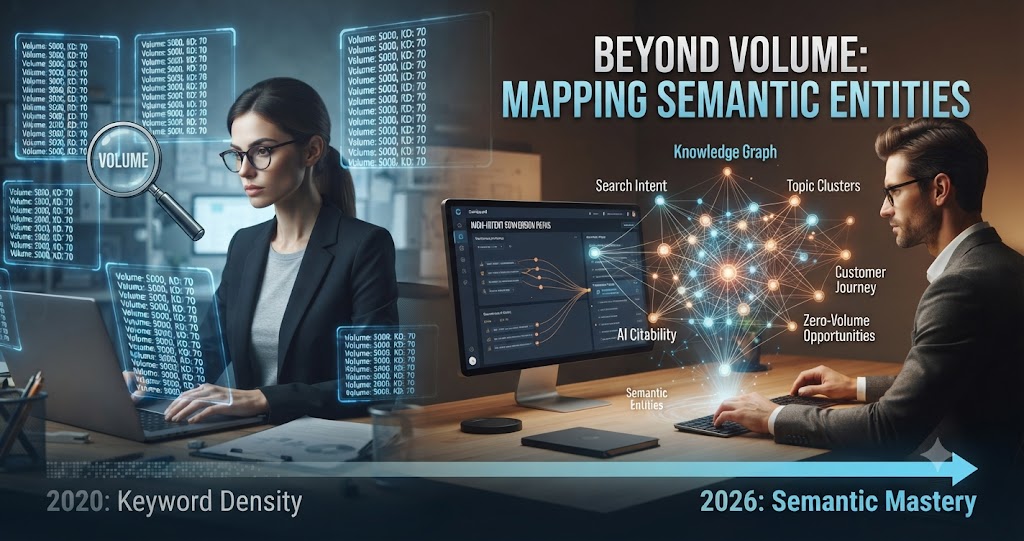
In 2026, the most effective keyword research strategy shifts from chasing high-volume search terms to mapping “semantic entities” that satisfy both human intent and AI-driven search engines. By prioritizing topical authority, intent-matching, and data-backed “zero-volume” opportunities, you can capture traffic that traditional competitors ignore.
Key Takeaways
- Intent over Volume: Prioritize keywords that align with the buyer’s journey stage (Informational, Navigational, Commercial, Transactional).
- Semantic Authority: Build “Topic Clusters” (a central Hub page linked to specific Spoke articles) to signal expertise to Google.
- AI-Optimization: Structure content with direct, 40-60 word answers at the top of your page to increase your chances of being cited by AI search overviews.
- The “Zero-Volume” Goldmine: Target highly specific, long-tail phrases that tools label as “0 volume”—these represent hyper-niche, high-conversion intent.
The New Reality of Semantic SEO
Gone are the days of “keyword density.” Today, search engines use natural language processing (NLP) to understand the meaning behind a query. When you research “best keyword research techniques,” you are not just targeting that exact phrase—you are targeting entities like “search intent,” “topic clustering,” and “predictive analytics.”
Instead of searching for keyword variations, identify the adjacent questions your audience asks. If you are targeting a keyword about CRM software, include content on integration challenges and deployment timelines. These are entities that keep the reader on your page longer.
Building Your 2026 Keyword Framework
To outperform competitors, move away from standalone blog posts and toward a “Hub-and-Spoke” model.
| Strategy Component | Focus Area | Goal |
| The Hub (Pillar) | Broad, high-volume topics | Establish domain authority |
| The Spoke (Cluster) | Specific, long-tail questions | Capture precise, high-intent traffic |
Execution Steps:
- Seed Expansion: Take a broad term and plug it into tools like Semrush or Ahrefs. Instead of targeting the seed, look for question modifiers (Who, What, Where, When, Why, How).
- Competitor Gap Analysis: Use tools to identify keywords your competitors rank for, but notice the content format they use. If they rank with a video, you must embed a video. If they rank with a listicle, build a better, more data-rich listicle.
- Intent Alignment: Match your page to the searcher’s goal. If a user is searching for “SEO tools,” do not serve a guide—serve a comparison table of tools.
Stop chasing vanity metrics. A keyword with 50 monthly searches that perfectly matches your Ideal Customer Profile (ICP) is worth more than a 10,000-volume keyword that attracts unqualified traffic.
Advanced Troubleshooting & Optimization
A common bottleneck in 2026 is “Content Cannibalization,” where multiple pages on your site compete for the same keyword.
How to audit your site for cannibalization:
- Check Google Search Console for queries where multiple pages appear in the results.
- If found, merge the lower-performing pages into one “Ultimate Resource” page.
- Redirect the old URLs to the new, authoritative hub.
Frequently Asked Questions
- Is keyword research still relevant with AI search?Yes, but the focus has changed. AI needs clear, organized, and expert-verified information to cite. Keyword research now informs the structure of the data you provide to those systems.
- Should I target zero-volume keywords?Absolutely. These phrases are often long-tail and highly specific. While a tool might report zero search volume, they often signal a user who is ready to buy or solve a very specific problem.
- How often should I update my keyword strategy?At minimum, once a quarter. Search trends in 2026 move fast; use tools like Google Trends to see if the intent behind your keywords has shifted from informational to commercial.
Data-Driven Comparison: SEO Approaches
| Approach | Traditional (2020-2023) | Modern (2026) |
| Focus | Keyword Density & Volume | Semantic Entities & Intent |
| Structure | Standalone Blog Posts | Topic Clusters (Hub & Spoke) |
| AI Interaction | Ignored | Optimized for Citability |
| Success Metric | Rankings (Position 1-3) | Conversions & AI Citations |